1. PROJECT MANAGEMENT AND LEADERSHIP
Effective management of all activities, with a focus on optimal resource use, regular progress monitoring, and identification and management of potential risks.
2. PROJECT VISIBILITY
- Communication strategy and plan - all relevant stakeholders will be regularly informed about the project, its activities, and results; clear channels and methods for communication with stakeholders and the wider public are defined for the duration of the project.
- Organization of project-related events, including conferences, workshops, and seminars, to share achievements and objectives.
- Digital communication - regular publication of informative and educational content about the project and climate neutrality through social media and websites.
- Collaboration with the media through press releases, interviews, and press conferences.
3. SENSEMAKING, STRATEGIC LEARNING AND INTERDISCIPLINARY COLLABORATION
- Knowledge mapping - creation of a visual representation that clearly presents all collected information and lessons learned from the project.
- Knowledge sharing - all collected knowledge will be available on a dedicated project website and on partners’ communication platforms.
- Future funding mapping - a comprehensive assessment of potential funding sources, including the public and private sectors and philanthropic sources.
- Climate-Neutral Greening Hub
- Phase I: Launch - Establishment of a Working Group and the Hub, bringing together representatives of project partners, with membership open to local stakeholders who wish to join.
- Phase II: Operationalization - The Hub will actively oversee and support project activities and assist in the development, implementation, and dissemination of climate solutions.
- Phase III: Co-creation through innovation camps and hackathons - An ideathon for citizens and a hackathon for students will be organized, where teams will work on ideas and prototypes for climate-neutral green interventions.
- Training on climate neutrality - a four-day training program for Hub members, focusing on climate neutrality and green practices.
- Twinning learning program: virtual meetings with partner cities to exchange experiences and insights.
- One-stop-shop for climate-neutral greening tactics - citizens will be able to receive advice, participate in modelling, and access tools for visualizing green interventions in their community.
- Twinning learning program: study visits
- Visits to twin cities - organization of visits to cities collaborating with us within the NetZeroCities program. These visits will enable the exchange of knowledge and experience related to climate neutrality.
- Hosting twin cities in Zagreb - representatives of twin cities will have the opportunity to visit Zagreb, where we will work together on climate-neutrality solutions.
4. TRANSFORMING INSIGHTS INTO PROGRAMS AND POLICIES
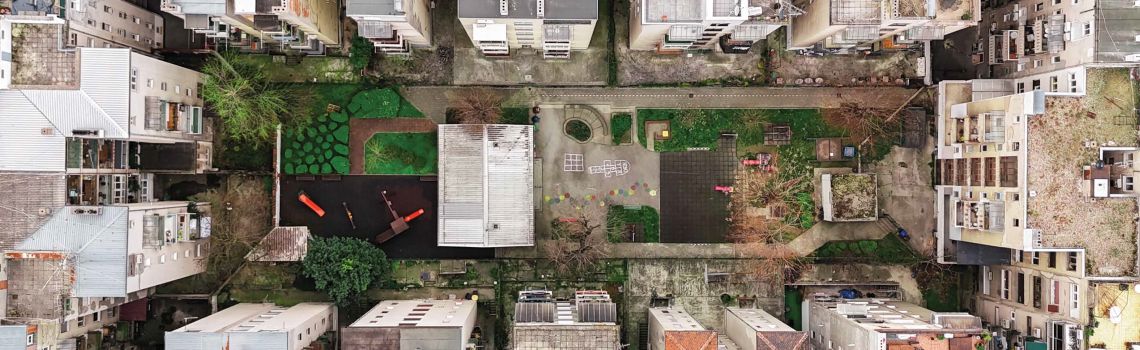
- Pilot Program for Climate-Neutral, Green Local Courtyards
- Phase I: Analysis - collection and analysis of spatial data to better understand the current situation and needs.
- Phase II: Modelling - development of landscape designs and visual models for climate-neutral and green courtyards.
- Phase III: Methodology - development of a methodology for selecting private and semi-public spaces to be included in the project.
- Phase IV: Project brief - defining all necessary criteria for interventions to be carried out in selected courtyards.
- Phase V: Location selection - creation of a list of pilot locations where green interventions will be implemented.
- Phase VI: Piloting - implementation of small-scale green interventions at selected locations to test their effectiveness in improving the environment, reducing carbon emissions, and adapting to climate change.
- Policy proposals for standardizing the pilot program for climate-neutral, green courtyards - we will develop proposals for scaling this pilot program at the local and national levels to support climate neutrality in communities.